Caregiver & Case Management
Improve caregiver coordination, case follow-up, communication, and accountability to help maintain reliable coverage, resolve issues faster, and keep every case running smoothly.

Caregiver & Case Management
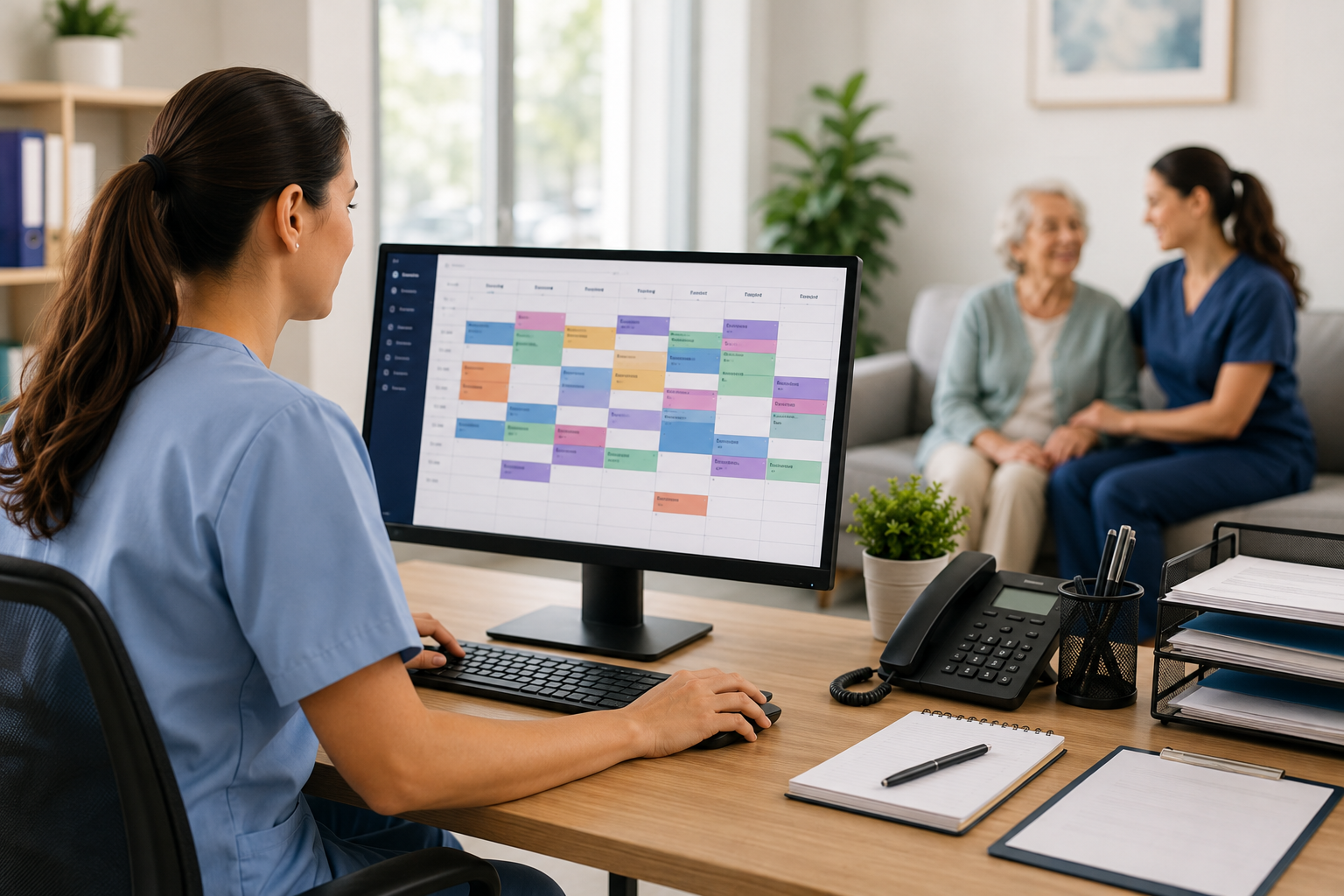
In a busy home care agency, coordinators often manage multiple cases at once.
A caregiver calls out.
A patient requests a replacement.
An authorization changes.
A caregiver becomes unavailable.
An EVV issue needs attention.
A family member is waiting for an answer.
Another department needs information.
Individually, these may seem routine. Together, they create an operational environment where important tasks can easily be delayed, overlooked, or handled inconsistently.
We analyze how your agency manages these situations and help establish a structured process for:
Identify → Assign → Prioritize → Follow Up → Resolve → Document → Monitor
The objective is simple: every important case issue should have clear ownership and a path to resolution.
What We Evaluate
Case Ownership & Accountability
Every active case should have clearly defined responsibility.
We evaluate how we assign cases internally, how we divide responsibilities among coordinators and departments, and what happens when an issue requires action.
Clear ownership helps prevent situations where everyone assumes someone else is handling the problem.
Caregiver–Case Coordination
Successful case management depends on more than finding an available caregiver.
We review how your agency considers factors such as:The goal is to create a consistent process that supports stronger caregiver–patient matches and greater case stability.
Open & Uncovered Case Management
We help evaluate how uncovered and partially covered cases are identified, prioritized, assigned, communicated, and monitored.
Instead of relying on individual memory, scattered messages, or repeated manual follow-ups, your agency can establish a clear workflow showing what requires immediate attention and what action has already been taken.
Call-Out & Replacement Workflow
Last-minute caregiver call-outs are unavoidable.
We review what happens from the moment a call-out is reported through replacement, patient communication, documentation, and follow-up.
A stronger process helps your team respond faster while ensuring important communication and responsibilities aren't missed.
Caregiver Communication
Caregivers communicate with the agency about availability, schedules, patients, timekeeping, transportation, call-outs, and more.
Without defined communication procedures, information can become fragmented across calls, text messages, emails, and different staff members.
We help agencies establish clearer communication pathways so employees know:
Who should receive the information.
Who is responsible for responding.
What requires documentation. What requires escalation. What requires follow-up.
Also:
Case Follow-Up & Issue Tracking
Escalation Procedures
Case Stability Monitoring
Your Software Should Support the Workflow — Not Create Another One
From Reactive Coordination to Proactive Case Management
What Better Case Management Can Improve